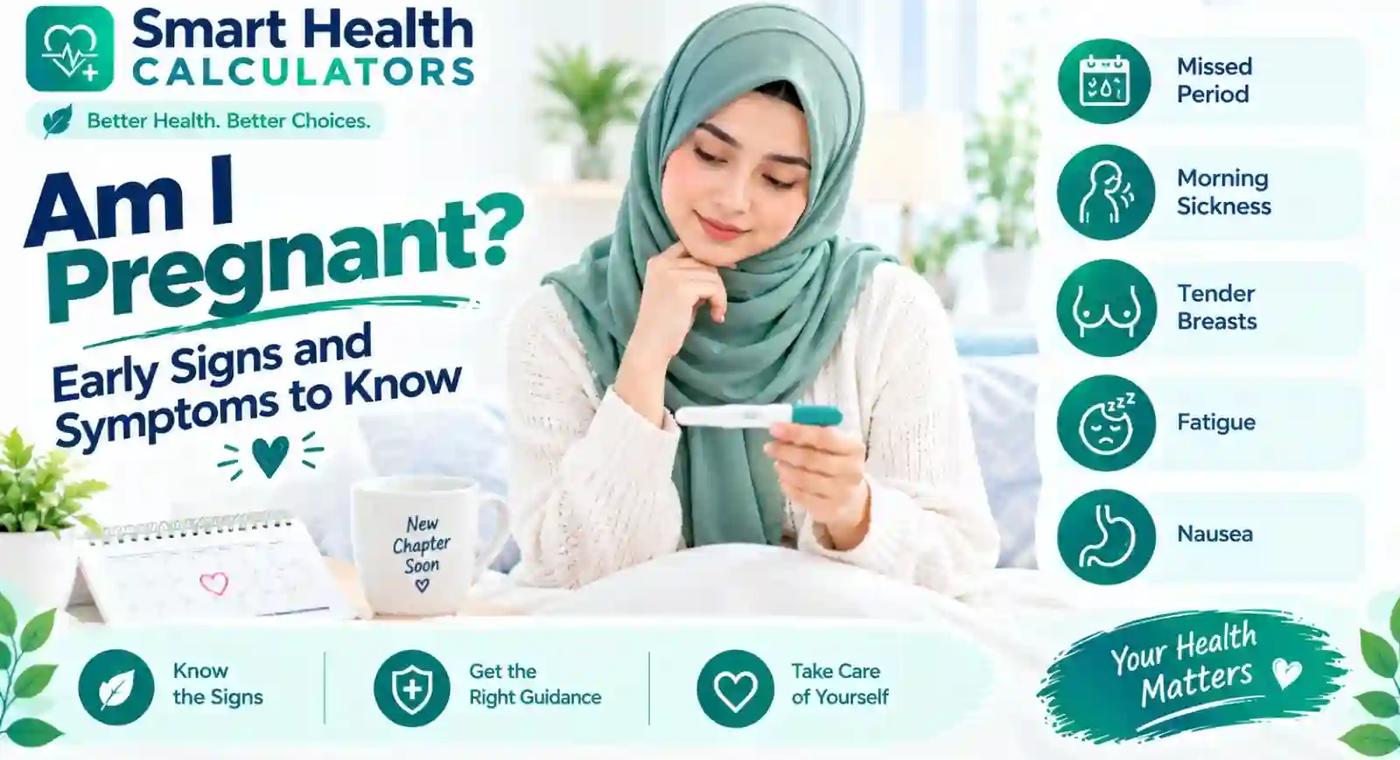
Am I Pregnant? Early Signs, Symptoms & When to Test
if you're pregnant? Learn early pregnancy signs, when to take a home test, how to read results, and which symptoms need urgent medical care.
You're staring at the calendar, counting days, and wondering whether the tiredness, the sore breasts, or the strange queasiness mean something. That uncertainty is stressful, whether you're hoping for a positive result or dreading one.
Here is the honest answer up front: symptoms can suggest pregnancy, but only a pregnancy test can confirm it. This guide explains the earliest signs, how they differ from PMS, when a test is most reliable, what your result means, and which symptoms need urgent medical care.
Medical accuracy note: This article gives general health information and cannot diagnose pregnancy. Last medically reviewed: [insert date and reviewer name after an actual clinical review]. Do not publish this line until a qualified professional has reviewed the content.
How Do You Know If You're Pregnant?
The most reliable way to know if you're pregnant is to take a pregnancy test on or after the first day of your missed period. Early signs such as a late period, tender breasts, nausea, tiredness, and frequent urination make pregnancy possible, but they also appear with PMS, stress, illness, and hormonal changes.
A home urine test detects the hormone hCG (human chorionic gonadotropin), which your body starts making after a fertilized egg implants in the uterus. If your test is negative but your period still doesn't arrive, repeat the test after a few days or speak with a healthcare professional.
What Does "Am I Pregnant?" Actually Mean Biologically?
To read your body's signals, it helps to understand the sequence of events behind them.
- Ovulation: An ovary releases an egg, usually around the middle of your cycle.
- Fertilization: If sperm meets the egg, fertilization can happen within about a day of ovulation.
- Implantation: The fertilized egg travels to the uterus and attaches to the lining (the endometrium). This typically happens several days after fertilization.
- hCG production: Once implantation occurs, the developing placenta begins producing hCG. This is the hormone pregnancy tests look for.
- Hormone shifts: Rising progesterone and estrogen cause many of the early symptoms people notice.
This timeline explains why testing too early so often gives a false negative. Even if conception has happened, hCG may not yet be high enough to detect. Your cycle length, your ovulation day, and the sensitivity of the test all affect when a positive result becomes possible.
If you want to estimate where you are in your cycle, the fertility window calculator guide and the article on ovulation signs and how to track ovulation are good starting points. You can also work backward with the guide to calculating your conception date.
The Earliest Signs of Pregnancy
Not everyone notices the same things, and some people notice nothing at all in the first couple of weeks. The NHS lists a missed period as the most common first sign, along with a range of other changes. Here are the signs people report most often.
A missed or late period
If your cycles are usually regular and your period is late, pregnancy is the first possibility to rule out. Some people still have light bleeding around the time their period is due, which is one reason a "period" doesn't always exclude pregnancy.
Tender, swollen, or tingling breasts
Rising hormone levels can make your breasts feel sore, heavy, or more sensitive than usual. The areolas may also look darker. The catch is that breast tenderness is also a classic PMS symptom.
Nausea, with or without vomiting
Despite the name, "morning sickness" can strike at any hour. For some people it starts around week 4 to 6 of pregnancy, and for others it never arrives. Others notice only a general queasiness or a sudden dislike of foods they usually enjoy.
Unusual tiredness
Progesterone rises sharply in early pregnancy, and it can leave you feeling drained even after a full night's sleep. If you've been dragging through the afternoon for no obvious reason, it's worth noting. Our guide to sleep during pregnancy explains why this happens and what helps.
Frequent urination
Needing the bathroom more often can begin in early pregnancy as blood volume and hormone levels change. It's easy to dismiss, but a clear change from your usual pattern is worth paying attention to.
Light spotting or mild cramping
Some people notice light spotting or faint cramps around the time of implantation. This is often called implantation bleeding. It tends to be lighter and shorter than a period, but it isn't present in every pregnancy, and the two can be hard to tell apart.
Other changes you might notice
- A heightened sense of smell
- A metallic taste in the mouth
- Bloating that feels like pre-period fullness
- Mood swings or feeling unusually emotional
- Constipation
- Headaches or light-headedness
- Changes in cervical mucus or discharge
- Skin changes, including breakouts
For a deeper dive into each symptom, see our guide to the first signs of pregnancy, and read pregnancy symptoms by trimester to see how things change as pregnancy progresses.
When Do Pregnancy Symptoms Start?
Many people ask whether symptoms can appear within days of conception. In most cases, noticeable symptoms don't begin until after implantation, and many people don't feel anything until around the time of the missed period or later.
Some people report feeling "different" even before a missed period. That can happen, but it is hard to separate from the normal hormonal swings of the luteal phase, the stretch between ovulation and your next period. Your body produces progesterone in that phase whether or not you're pregnant, so tender breasts, bloating, and fatigue can show up either way.
Three points are worth remembering:
- Symptom timing varies a lot. One person may feel queasy at week 4, while another feels fine until week 8.
- Having no symptoms doesn't rule out pregnancy. Plenty of people have a healthy early pregnancy with few or no obvious signs.
- Having symptoms doesn't confirm pregnancy. Stress, illness, changes in routine, and hormonal conditions can mimic them.
That is why this article keeps returning to testing. Symptoms start the conversation, but a test settles it.
Am I Pregnant or Is It PMS? A Side-by-Side Comparison
Early pregnancy and PMS share many symptoms, which is the main reason this question feels so hard to answer. The table below shows where they overlap and where they tend to differ.
| Symptom | More typical of PMS | More typical of early pregnancy |
|---|---|---|
| Breast changes | Tenderness that eases once your period starts | Soreness that continues past your expected period, sometimes with darker areolas |
| Cramping | Cramps that build up and peak as your period begins | Mild, on-and-off twinges that don’t lead to a full period |
| Bleeding | A flow that becomes heavier over a day or two | Light pink or brown spotting that stays light and short |
| Fatigue | Tiredness that lifts when your period arrives | Deep tiredness that continues or increases |
| Nausea | Uncommon | More common, especially with food aversions |
| Mood | Irritability or low mood that eases with your period | Emotional swings that persist |
| Urination | Usually unchanged | Often more frequent |
| Period | Arrives on schedule | Late or missing |
None of these differences is reliable on its own. If your period is late, the most useful step is to test instead of trying to decode your symptoms. You can learn more about cycle patterns in our guide to ovulation signs and tracking.
Implantation Bleeding vs. a Period: How to Tell the Difference
Implantation bleeding is one of the most searched topics around this question, and one of the most misunderstood.
What it may look like:
- Light pink, rust-coloured, or brown spotting rather than bright red flow
- A very small amount, often just when you wipe
- A short duration, from a few hours to a couple of days
- Mild or no cramping
What a period usually looks like:
- Bleeding that starts light and grows heavier
- Bright to dark red blood, sometimes with clots
- A flow that lasts several days
- Cramping that is more noticeable
Not everyone who is pregnant experiences implantation bleeding, and spotting can have many other causes. If you notice bleeding and think you could be pregnant, test and, if the bleeding is heavy or painful, seek medical advice. Heavy bleeding or severe pain needs prompt attention (see the warning signs section below).
When Should You Take a Pregnancy Test?
The most dependable time to test is on or after the first day of your missed period. Tests taken earlier can pick up pregnancy in some cases, but a negative result before your period is due is less certain.
Both the Office on Women's Health and the U.S. Food and Drug Administration note that testing too early can produce a false-negative result. The reason is simple: hCG needs time to build up in your urine.
A quick timing guide
| Your situation | When to test | Why |
|---|---|---|
| Regular cycle | From the first day of your missed period | hCG is usually high enough to detect by then |
| Early test, before a missed period | Only if you can’t wait, and treat a negative as inconclusive | Results are less reliable this early |
| After unprotected sex | Follow the test’s instructions and the advice of your health service; the NHS suggests waiting about three weeks after unprotected sex for a reliable result | It takes time for hCG to rise |
| Irregular cycles | Wait at least a few weeks after unprotected sex, then repeat if your period still hasn’t come | Ovulation timing is harder to predict |
| After a negative test but no period | Repeat after a few days | Levels may have been too low the first time |
Does time of day matter?
Many manufacturers suggest using first-morning urine because it tends to be more concentrated, especially in the earliest days. If you test later in the day, avoid drinking large amounts of fluid beforehand, since very dilute urine can reduce sensitivity. Once you're past your missed period, the time of day matters much less.
What about irregular cycles?
If your periods are unpredictable, it's hard to know when a period is "late." In that case, count from the date of possible conception or unprotected sex, and test about three weeks later. Repeat the test if your period still hasn't started.
How Do Home Pregnancy Tests Work?
A home test uses antibodies on a strip to detect hCG in your urine. When hCG is present above the test's detection threshold, a second line, plus sign, or digital message appears. The control line or indicator tells you the test worked.
Tips for the most reliable result:
- Check the expiry date on the package.
- Read the instructions fully before you start, because brands differ.
- Use the amount of urine specified, and don't dip longer than directed.
- Set a timer and read the result within the window stated in the instructions.
- Don't re-read the test hours later, as changes over time can mislead you.
Line-based vs. digital tests
Line-based tests are inexpensive and widely available, though faint lines can leave you second-guessing. Digital tests show a clear word or symbol and remove the guesswork about reading lines, though they usually cost more. Both detect the same hormone, so the "better" choice mostly depends on whether you value clarity or price. Some tests are marketed as "early detection" and claim to work before a missed period. Their sensitivity varies by brand, so check the packaging rather than assuming.
Urine tests vs. blood tests
A healthcare provider can perform blood tests that detect hCG, and these can sometimes pick up pregnancy slightly earlier than a urine test. A qualitative blood test confirms whether hCG is present, while a quantitative blood test (beta-hCG) measures how much. MedlinePlus explains both types and when each is used.
How to Read Your Pregnancy Test Result
A clear positive
A clear positive means hCG was detected, and pregnancy is very likely. False positives are uncommon, but they can happen, for example after a recent pregnancy loss, with certain fertility medications containing hCG, or with some medical conditions. A healthcare provider can confirm the result.
A clear negative
A negative result means no hCG was detected at that moment. If you tested before your missed period, it may be too early. If your period still hasn't come, repeat the test in a few days.
A faint line
A faint second line often indicates low hCG, which can occur very early in pregnancy. However, an indent or "evaporation line," which appears as the test dries, can look similar. The best approach is to read the test only within the stated window, then repeat the test in two to three days, ideally with first-morning urine. If the line grows darker, that's reassuring. If you're uncertain, a clinic can run a test for you.
An invalid result
If the control line or indicator doesn't appear, the test didn't work correctly. Repeat with a new test.
Why You Might Have Symptoms but a Negative Test
This situation is common and frustrating. Possible explanations include:
- Testing too early. hCG may not yet be detectable.
- Diluted urine. Too much fluid beforehand can lower concentration.
- Ovulation later than you thought. This is common with irregular cycles.
- Another cause for your symptoms. Stress, illness, travel, significant weight change, intense exercise, thyroid conditions, polycystic ovary syndrome (PCOS), or perimenopause can all affect your period and how you feel.
- A faulty or expired test. Rare, but possible.
If your period is more than a week late and you keep testing negative, speak with a healthcare professional. They can check for pregnancy with a blood test and look at other reasons your cycle may have changed. If stress or low mood is making this waiting period harder, the mental health checker and our guide to natural ways to reduce stress may help.
Can You Be Pregnant Without Symptoms?
Yes. Some people have very few or no early symptoms, and a lack of symptoms is not a sign that something is wrong. Symptoms also tend to come and go.
If you've had unprotected sex, or your contraception failed, and your period is late, testing is still the right step regardless of how you feel.
Special Situations: Can You Still Be Pregnant If...
You're on birth control?
Contraception reduces the chance of pregnancy, but no method is perfect. Missed pills, vomiting, certain medications, or incorrect use can all lower effectiveness. If you think your birth control may have failed, test and speak with a healthcare provider. Birth control pills don't make a pregnancy test inaccurate, but a pregnancy can still occur if the pill wasn't taken correctly.
You took emergency contraception?
Emergency contraception can change the timing of your next period, making it earlier or later than expected. If your period is more than a week late after taking it, take a pregnancy test. The testing windows above still apply: wait long enough after the event for hCG to be detectable.
You had sex during your period?
Pregnancy is less likely during a period but not impossible, particularly if your cycle is short or irregular, because sperm can survive in the body for several days.
There was pre-ejaculate?
Pre-ejaculate may carry sperm in some cases, and pregnancy from withdrawal is possible. If you're worried, take a pregnancy test at the appropriate time, and ask a pharmacist or clinic about emergency contraception, which works best when taken as soon as possible.
Your periods are irregular?
Irregular cycles make timing harder, but pregnancy is still possible. Follow the "three weeks after unprotected sex" approach, and repeat testing if your period hasn't arrived.
Warning Signs: When to Get Urgent Medical Help
This section matters more than anything else in this guide. Seek emergency medical care straight away if you have any of the following, even if you haven't taken a test or your test is negative:
- Sudden or severe pain in your lower abdomen or pelvis, especially on one side
- Pain at the tip of your shoulder
- Heavy vaginal bleeding
- Fainting, collapsing, or severe dizziness
- Pain when passing stools, with other symptoms listed above
These can be signs of an ectopic pregnancy, where a fertilized egg implants outside the uterus, most often in a fallopian tube. It's a medical emergency because it can cause internal bleeding. The NHS ectopic pregnancy symptoms page and the American College of Obstetricians and Gynecologists both describe the warning signs and the need for prompt assessment.
Call your local emergency number or go to the nearest emergency department. Don't wait for a positive test, and don't wait for symptoms to "pass."
Also contact a healthcare provider promptly for persistent vomiting that stops you keeping fluids down, a fever, or bleeding that is heavy or comes with pain.
What to Do If Your Test Is Positive
A positive result can bring excitement, anxiety, relief, or all of them at once. All those reactions are normal. Here are sensible next steps:
- Confirm if you wish. Repeat the test, or have a clinic confirm it.
- Book a prenatal appointment. Early care is important. Your provider can talk through your health history, medications, and options.
- Review your medications and supplements. Don't stop prescribed medicines without medical advice, but do ask whether any need changing.
- Talk about folic acid. Health services such as the NHS commonly recommend folic acid early in pregnancy. Ask your provider what applies to you.
- Avoid alcohol, smoking, and recreational drugs, and ask your provider about caffeine and diet.
- Learn your timeline. Use the pregnancy calculator to estimate your due date, and read about pregnancy calculators, due dates, and trimesters. To see how weeks translate into months, see pregnancy weeks to months and how many weeks a full-term pregnancy lasts.
- Look after yourself. Staying hydrated matters, and our guide to water intake during pregnancy explains how much you may need.
If this pregnancy is unplanned or you're unsure how you feel, you're not alone. A doctor, nurse, or sexual health clinic can talk through your options confidentially and without judgment. Services and eligibility differ by country, so check with your local health authority.
What to Do If Your Test Is Negative
- If you tested early: wait a few days and test again.
- If your period still doesn't come: see a healthcare professional, especially if you've missed more than one period or have symptoms that worry you.
- If you're not trying to conceive: a negative result can be a relief, but it's a good moment to review your contraception.
- If you are trying to conceive: track ovulation, and read our guide to the fertility window to time things more effectively.
Common Myths About Early Pregnancy Signs
Myth: Morning sickness only happens in the morning.
It can happen at any time of day or night.
Myth: If you don't feel sick, something is wrong.
Many healthy pregnancies involve little or no nausea.
Myth: A negative test taken before a missed period is conclusive.
Early results are less reliable, which is why repeating the test matters.
Myth: Any bleeding means you're not pregnant.
Light bleeding can happen in early pregnancy, though it should always be discussed with a provider if it's heavy, painful, or worrying.
Myth: A symptom checklist can confirm pregnancy.
No checklist or online quiz can confirm pregnancy. It can only help you decide when to test.
A Practical Example: Two Different Experiences
These are illustrative, composite examples, not individual medical cases.
Example 1. Someone with a regular 28-day cycle notices breast tenderness and tiredness around day 24. They test that day and get a negative result. Their period doesn't arrive, so they test again five days later and see a clear positive. The early test wasn't wrong. It was just too soon.
Example 2. Someone with irregular cycles feels nauseous and tired for weeks but gets several negative tests. A blood test at a clinic shows no pregnancy, and further assessment points to a thyroid issue affecting their cycle. Their symptoms were real, but the cause was something else.
The lesson from both: testing at the right time, repeating when needed, and seeking help when results and symptoms don't match.
Why Use SmartHealthCalc While You Wait for Answers
Waiting for a result is stressful, and good information helps. SmartHealthCalc offers free tools and plain-language guides that support you at each step. Here is how they fit together:
- Estimate your timeline with the pregnancy calculator.
- Understand your cycle through our guides on ovulation and the fertility window.
- Check in with yourself using the mental health checker.
- Look after your wellbeing with guides on pregnancy brain fog and sleep during pregnancy.
- Browse everything in our free health tools and health blog.
These tools are educational and don't replace medical care. They can help you prepare questions for your doctor, not answer them for you.
Frequently Asked Questions
Can symptoms alone tell me if I'm pregnant?
No. Symptoms such as a late period, nausea, tiredness, and breast tenderness can suggest pregnancy, but they overlap with PMS and other conditions. A pregnancy test is the only reliable way to find out, and a healthcare provider can confirm the result.
What is the earliest sign of pregnancy?
For many people, the earliest noticeable sign is a missed period. Some people notice tender breasts, tiredness, or light spotting beforehand, but these signs vary widely and aren't reliable on their own.
How soon after unprotected sex can I take a pregnancy test?
It takes time for hCG to rise to detectable levels. Health services such as the NHS suggest waiting around three weeks after unprotected sex for a reliable result. Testing earlier can give a false negative, so repeat the test if your period doesn't arrive.
Can a pregnancy test be negative when I'm pregnant?
Yes. This is most likely if you test very early, if your urine is diluted, or if your ovulation was later than expected. If your period is late and your test is negative, repeat it after a few days and see a healthcare professional if your period still doesn't come.
What does a faint line on a pregnancy test mean?
A faint line can mean hCG levels are still low, which is common in very early pregnancy. It can also be an evaporation line if you read the test after the stated time. Repeat the test in two to three days, and consult a clinic if you remain unsure.
Can I be pregnant and still have bleeding?
Yes. Light spotting can occur in early pregnancy, including around implantation. However, heavy bleeding, bleeding with pain, or any bleeding that worries you should be assessed by a healthcare provider promptly.
Which symptoms need urgent medical attention?
Sudden or severe abdominal or pelvic pain, shoulder-tip pain, heavy bleeding, fainting, or severe dizziness need emergency care. These can be signs of an ectopic pregnancy or internal bleeding. Don't wait for a positive test before seeking help.
Conclusion:
Wondering "am I pregnant?" is common, and the path to an answer is simple. Symptoms raise the question, a well-timed test answers it, and a healthcare professional can confirm and guide you from there.
Your action plan:
- Note your symptoms and the date of your last period.
- Wait until the first day of your missed period (or about three weeks after unprotected sex) to test.
- Follow the test instructions exactly, and read the result within the stated time.
- Repeat a negative test after a few days if your period hasn't come.
- Seek urgent care straight away if you have severe pain, shoulder-tip pain, heavy bleeding, or fainting.
- Book an appointment after a positive test, or if your results and symptoms don't match.
Ready to take the next step? Try the free pregnancy calculator, explore more health tools.
Medical Disclaimer
This article is for general education only. It is not medical advice, diagnosis, treatment, prescription guidance, or a replacement for professional healthcare. Speak with a qualified healthcare professional for personal medical concerns, symptoms, pregnancy concerns, mental health crisis, medication questions, or before making major health changes.