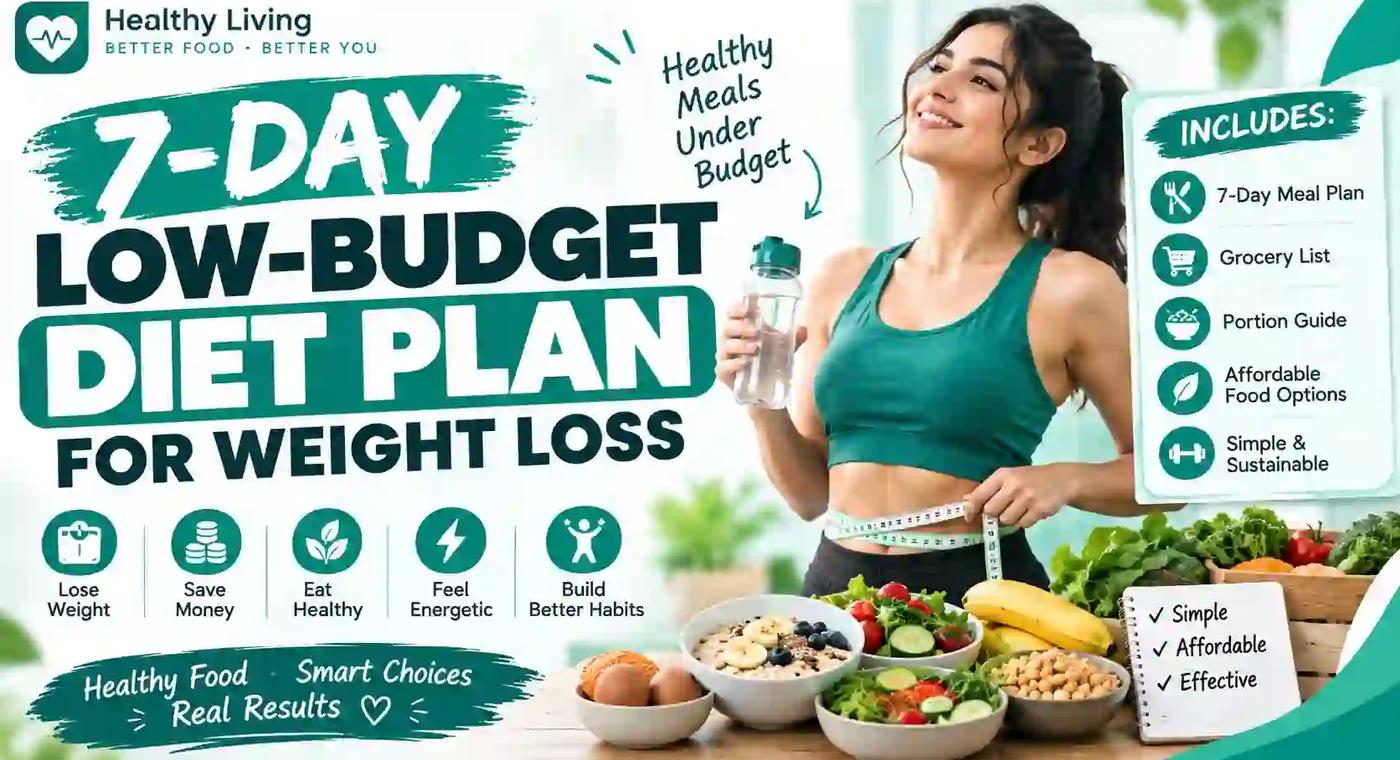
Low-Budget Diet Plan: 7-Day Affordable Weight Loss Meal Plan
Follow a low-budget diet plan with affordable foods, a 7-day meal plan, grocery list, portion tips, and practical strategies for sustainable weight loss.
Losing weight doesn't require expensive protein powders, specialty "diet foods," or a grocery bill that rivals your rent. Some of the most effective foods for weight loss — lentils, eggs, oats, seasonal vegetables, rice — are also among the cheapest items in any grocery store. The real skill isn't finding exotic ingredients; it's structuring ordinary, affordable food into a plan that actually creates a calorie deficit.
This guide gives you a complete 7-day low-budget diet plan built around inexpensive staples, along with a grocery list, portion guidance, and practical substitutions. One honest note before we start: this plan is a flexible framework for sustainable, affordable eating — not a promise of a specific number of pounds lost in a week. The CDC notes that gradual weight loss of roughly 1–2 pounds per week tends to be more sustainable long-term than rapid loss, and that's the pace this plan is genuinely built to support.
Why Budget and Weight Loss Aren't Actually in Conflict
There's a persistent myth that healthy eating requires premium ingredients — cold-pressed juices, imported superfoods, protein isolates. In reality, the foundational foods behind almost every evidence-based weight loss approach are inexpensive: legumes, eggs, whole grains, seasonal produce, and basic dairy.
USDA's MyPlate guidance specifically encourages planning meals ahead, checking what's already available at home before shopping, and building meals around affordable, healthy staples — an approach that naturally supports both your wallet and your calorie goals. The expensive part of most diets isn't the food itself; it's the branded "diet" products layered on top of what a genuinely balanced plate already requires.
Understanding Calorie Deficit Without Extreme Restriction
Before the meal plan itself, it's worth understanding the mechanism behind it. Weight loss happens through a calorie deficit — consistently eating somewhat less energy than your body uses. NIDDK's guidance on weight management emphasizes that calorie needs are individualized, varying by age, body size, sex, metabolism, and activity level — there's no single calorie number that applies universally to everyone reading this.
Rather than assigning you a fixed calorie target, this plan focuses on portion awareness, nutrient density, and satiety — filling foods that keep you comfortably full on fewer overall calories, which naturally supports a moderate deficit without requiring you to obsessively count every gram. If you do want a personalized calorie number to work from, our Calorie Intake Planner calculates this based on your specific stats rather than a generic average.
The Budget Weight Loss Grocery List
Before the day-by-day plan, here's the core shopping list this entire week is built around. Most of these ingredients are among the least expensive items in any grocery store, and several can be bought in bulk to further reduce cost per meal.
Proteins (affordable and versatile):
- Eggs
- Lentils (masoor, moong, or chana dal)
- Chickpeas (dried or canned)
- Chicken (bought whole or in bulk cuts, generally cheaper than pre-cut breast)
- Plain yogurt
Carbohydrates and grains:
- Brown or white rice
- Oats
- Whole wheat flour (for roti/chapati)
- Potatoes
Vegetables (seasonal and affordable):
- Onions, tomatoes, spinach, cabbage, carrots, cucumbers — whatever is currently in season locally, since seasonal produce is consistently the cheapest option
- Frozen mixed vegetables (a genuinely useful budget staple, since they're pre-cut, don't spoil quickly, and often cost less than fresh out-of-season equivalents)
Fruits:
- Bananas, apples, or whatever seasonal fruit is cheapest that week
- Seasonal fruit varies significantly by region, so this is worth adjusting based on what's actually affordable near you
Pantry basics:
- Cooking oil (used sparingly)
- Garlic, ginger, basic spices
- Salt and black pepper
A simple money-saving principle worth building into every shopping trip: buy vegetables and fruits that are currently in season, since out-of-season produce carries a real price premium for the same nutritional value.
The 7-Day Low-Budget Meal Plan
This plan uses repeating core ingredients across multiple days — a deliberate strategy, since buying in bulk and reusing staples across several meals is one of the most effective ways to control food costs without sacrificing variety in how those staples are prepared.
Day 1
Breakfast: Two boiled or scrambled eggs with a slice of whole wheat toast
Lunch: Lentil dal with brown rice and a side of cucumber salad
Dinner: Grilled or baked chicken with a portion of steamed mixed vegetables
Snack: A banana or a small handful of roasted chickpeas
Day 2
Breakfast: Oatmeal cooked with water or low-fat milk, topped with sliced banana
Lunch: Chickpea curry (chana masala) with a small portion of rice
Dinner: Vegetable and egg stir-fry with a side salad
Snack: Plain yogurt with a few sliced fruits
Day 3
Breakfast: Two eggs with sautéed spinach
Lunch: Leftover chana masala from Day 2, paired with whole wheat roti instead of rice for variety
Dinner: Baked or pan-seared chicken thighs with roasted seasonal vegetables
Snack: An apple or seasonal fruit of your choice
Day 4
Breakfast: Oatmeal with a spoonful of peanut butter, if affordable and available
Lunch: Moong dal with rice and a cucumber-tomato side salad
Dinner: Vegetable soup made from whatever produce needs using up, with a boiled egg on the side
Snack: Roasted chickpeas or a small portion of yogurt
Day 5
Breakfast: Two boiled eggs with whole wheat toast
Lunch: Leftover moong dal, paired with a fresh side of shredded cabbage salad
Dinner: Grilled chicken with steamed frozen mixed vegetables
Snack: A banana or seasonal fruit
Day 6
Breakfast: Vegetable omelet made with onions, tomatoes, and spinach
Lunch: Chickpea and vegetable curry with a small portion of rice
Dinner: Baked potatoes with a side of sautéed greens and a boiled egg
Snack: Plain yogurt
Day 7
Breakfast: Oatmeal with fruit
Lunch: Lentil soup (using whichever dal is left) with whole wheat roti
Dinner: Simple grilled chicken or vegetable stir-fry, using up remaining fresh produce from the week
Snack: Whatever fruit or roasted chickpeas remain
Why This Plan Repeats Ingredients Deliberately
If you noticed lentils, eggs, and chicken appearing across multiple days, that's intentional rather than a shortcut. Buying a larger quantity of a few core proteins and grains, then varying preparation and pairing, is consistently cheaper per meal than buying a wide variety of different proteins in small amounts throughout the week.
This is also where batch cooking genuinely pays off. Cooking a large pot of dal or a batch of grilled chicken on one day and portioning it across two or three meals saves both time and money compared to cooking a fresh dish from scratch every single meal.
Portion Control Without Special Tools or Apps
You don't need a food scale or a calorie-tracking app to eat appropriate portions, though either can help if you find them genuinely useful. A few practical, low-effort approaches:
- Use your hand as a rough guide — a palm-sized portion of protein, a fist-sized portion of carbohydrates, and unlimited non-starchy vegetables is a widely used, simple heuristic
- Fill half your plate with vegetables before adding grains or protein, which naturally moderates the more calorie-dense portions of the meal
- Serve meals on a slightly smaller plate, since this genuinely does influence how much food feels like "enough" without requiring conscious restriction
- Avoid serving directly from cooking pots at the table, since this makes second helpings an unconscious habit rather than a deliberate choice
If you want more structured portion guidance built around your specific goals, the Diet Plan Generator can help translate this general framework into more precise, personalized targets.
Affordable Protein Sources: Beyond Just Chicken and Eggs
Protein deserves special attention in a budget context because it's often assumed to be the most expensive part of a weight-loss diet — but that's only true if you default to premium cuts of meat or protein supplements.
Lentils and legumes are among the cheapest complete or near-complete protein sources available, and they double as a fiber source, which supports satiety, one of the more consistently useful traits in a weight-loss context.
Eggs remain one of the most cost-efficient protein sources per gram, versatile enough to work across breakfast, lunch, or dinner without feeling repetitive if prepared differently each time (boiled, scrambled, in an omelet, or as a topping).
Whole chicken versus pre-cut pieces — buying a whole chicken and portioning it yourself is consistently cheaper per gram of usable meat than buying pre-cut breast fillets, even though it requires slightly more prep effort.
Yogurt offers protein alongside calcium and, in the case of plain varieties, at a lower cost than flavored or Greek-style yogurt marketed specifically for fitness.
For a deeper look at how much protein you actually need daily and how to hit that target affordably, our guide on how much protein you need per day breaks this down by body weight and activity level.
Meal Prepping to Stretch Your Budget Further
Meal prepping isn't just a time-saver — done right, it's one of the more effective cost-control strategies available, since it reduces food waste and prevents the kind of impulsive, expensive takeout decisions that happen when nothing prepared is available.
A practical weekly approach:
- Cook grains and legumes in bulk at the start of the week (a large pot of rice, a batch of dal) and portion them into containers for reuse across multiple meals
- Pre-chop vegetables as soon as you get home from shopping, so they're ready to cook quickly rather than tempting you toward a faster, less healthy alternative on a busy evening
- Cook proteins in larger batches — grill or bake more chicken than you need for one meal, then refrigerate the rest for the next day or two
- Freeze portions you won't eat within a few days, particularly cooked grains and legumes, which generally freeze and reheat well without significant quality loss
Staying in a Calorie Deficit Without Feeling Deprived
The biggest reason budget diet plans fail isn't usually the food cost — it's that overly restrictive plans feel unsustainable and get abandoned within days. A few practical strategies that support a moderate deficit without triggering that all-or-nothing feeling:
- Prioritize fiber and protein at each meal, since both genuinely support satiety more effectively per calorie than refined carbohydrates or added fats
- Drink water before meals, since mild dehydration is sometimes mistaken for hunger, and adequate hydration supports overall appetite regulation — our daily water intake guide and hydration and weight loss guide cover this connection in more depth
- Allow flexibility within the structure — if Day 3's dinner doesn't appeal to you that evening, swapping it with Day 5's dinner keeps you within the same nutritional framework without forcing an unwanted meal
- Don't treat this as a rigid seven-day sprint — the actual goal is building a repeatable, affordable eating pattern you can sustain well beyond this specific week
When a Seven-Day Plan Isn't Enough on Its Own
It's worth being direct about something many diet articles skip: a single week of eating well, however well-structured, is a starting point rather than a complete solution. NIDDK's guidance on sustainable weight management specifically emphasizes eating patterns that can be maintained over time, rather than short-term interventions treated as a finish line.
If this seven-day structure genuinely works for your schedule and preferences, the most useful next step is simply repeating and adjusting it — rotating in different seasonal vegetables, varying spices, or swapping specific proteins — rather than treating it as a one-time reset before returning to previous habits.
Pairing This Plan With Physical Activity
While this guide focuses specifically on affordable nutrition, weight management guidance from NIDDK consistently frames diet and physical activity as working together rather than as substitutes for one another. You don't need a gym membership to add movement into your week — a consistent walking habit costs nothing and pairs naturally with the dietary changes above.
Our beginner home workout plan requiring no equipment and 30-minute workout plan for busy people are both built around the same budget-conscious philosophy as this meal plan — genuinely accessible without requiring paid equipment or a gym membership.
Common Mistakes to Avoid on a Budget Diet
Buying too much fresh produce at once. Overbuying perishables that spoil before you use them quietly erases the savings you were trying to achieve — buy fresh vegetables in amounts you'll realistically use within a few days, and lean on frozen vegetables for the rest.
Skipping meals to "save calories." This typically backfires, leading to overeating later in the day and undermining the steady, sustainable pace this plan is built around.
Treating this as an all-or-nothing week. If one day doesn't go according to plan, the next meal — not the next Monday — is the right place to get back on track.
Assuming cheap automatically means unhealthy, or healthy automatically means expensive. As this entire guide demonstrates, some of the most nutritionally solid foods available are also among the least expensive.
Frequently Asked Questions
Can I lose weight with a low budget diet?
Yes — weight loss depends on maintaining a consistent calorie deficit alongside adequate nutrition, and affordable staples like lentils, eggs, whole grains, and seasonal vegetables can fully support that without requiring expensive specialty foods.
How much can I lose in one week on a diet?
The CDC notes that gradual weight loss of about 1–2 pounds per week tends to be more sustainable than rapid weight loss, though individual results vary based on starting point, adherence, and activity level — a seven-day plan is better understood as a sustainable framework than a guarantee of a specific number.
What is the cheapest food to eat for weight loss?
Lentils, eggs, seasonal vegetables, oats, and rice are consistently among the most affordable and nutritionally useful foods for a weight-loss-focused diet, offering strong protein or fiber content relative to their cost.
How can I get enough protein on a small budget?
Lentils, chickpeas, eggs, and whole chicken (rather than pre-cut breast) are cost-efficient protein sources that can meet most people's daily needs without relying on protein powders or premium cuts of meat.
Should I count calories on a budget diet?
It's not strictly necessary if you focus on portion awareness and filling, nutrient-dense foods, though calorie tracking can help if you find it useful — our Calorie Intake Planner can give you a personalized target if you'd prefer a specific number to work from.
Is a seven-day diet plan safe for everyone?
This general framework is designed for typical healthy adults, but individual calorie and nutrition needs vary by age, activity level, and health status. Anyone with an existing medical condition, or who is pregnant, nursing, or under 18, should consult a healthcare provider before starting any structured diet plan.
When should I talk to a doctor before dieting?
If you have an existing health condition, take regular medication, are pregnant or breastfeeding, or have a history of disordered eating, checking with a healthcare provider before making significant dietary changes is the appropriate first step.
The Bottom Line
A genuinely effective low-budget diet plan doesn't require sacrificing nutrition for cost, or vice versa — lentils, eggs, seasonal vegetables, and whole grains deliver real nutritional value at a fraction of the cost of "diet-branded" alternatives. Treat this seven-day structure as a repeatable, adjustable framework rather than a rigid one-time plan, and pair it with consistent movement and adequate hydration for a more complete, sustainable approach.
Last medically reviewed/verified: September 2026. Calorie needs and dietary recommendations vary by individual; this guide reflects general public health guidance and is not a substitute for personalized advice from a healthcare provider or registered dietitian.
If you want to build a more personalized version of this plan around your own calorie and protein targets, start with the Calorie Intake Planner and Diet Plan Generator — both let you adapt this same budget-friendly framework to your specific goals rather than a generic seven-day average.
Medical Disclaimer
This article is for general education only. It is not medical advice, diagnosis, treatment, prescription guidance, or a replacement for professional healthcare. Speak with a qualified healthcare professional for personal medical concerns, symptoms, pregnancy concerns, mental health crisis, medication questions, or before making major health changes.