Sleep Hygiene: 7 Tips for Better Sleep Every Night
How sleep hygiene can improve your sleep with practical tips for a consistent schedule, better bedroom environment, wind-down routine, and healthy habits.
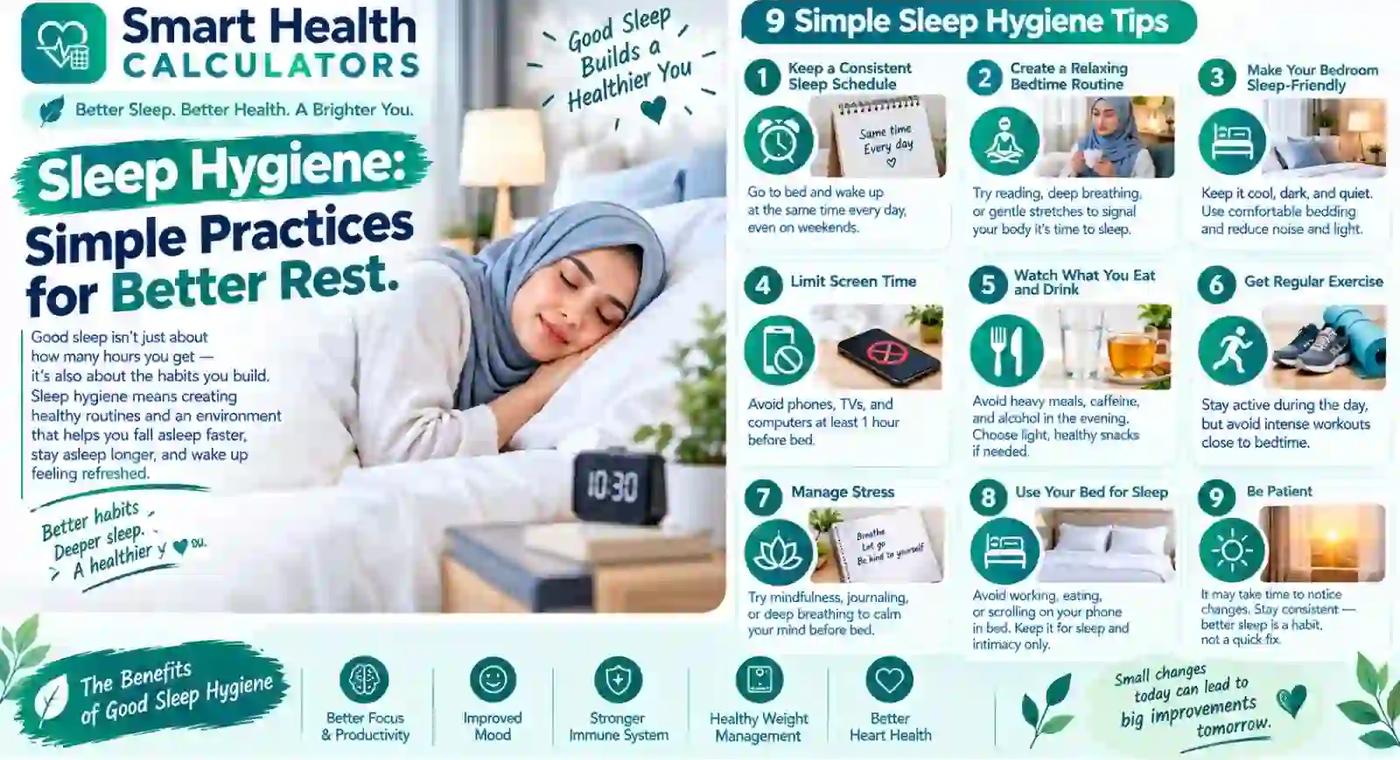
Getting a good night's sleep sounds simple, yet for millions of people it's one of the hardest parts of daily life. You lie down, close your eyes, and instead of drifting off, your mind starts running through tomorrow's to-do list. Or you fall asleep fine but wake up at 3 a.m. and can't get back under. This is where sleep hygiene comes in — not as a medical treatment, but as a practical set of habits that make good sleep more likely, night after night.
Sleep hygiene isn't about one magic trick. It's the combination of your daily routines, your bedroom environment, and your body's internal clock working together. Small, consistent changes in each of these areas tend to produce far better results than any single "hack." This guide walks through what sleep hygiene actually means, why it matters, and exactly what you can start doing tonight.
What Is Sleep Hygiene?
Sleep hygiene refers to the everyday habits and environmental factors that either support or interfere with your ability to fall asleep and stay asleep. According to the CDC's guidance on sleep hygiene, good sleep habits include keeping a consistent sleep schedule, creating a quiet and comfortable bedroom, and avoiding things like late caffeine and heavy meals close to bedtime.
The term borrows from "dental hygiene" for a reason — just as brushing and flossing don't guarantee perfect teeth but dramatically reduce problems, sleep hygiene doesn't guarantee perfect sleep every night, but it meaningfully reduces the odds of poor sleep becoming a pattern.
Good sleep hygiene generally covers four areas:
- Sleep environment — light, noise, temperature, and comfort in your bedroom
- Sleep schedule — consistency in when you go to bed and wake up
- Pre-sleep routine — what you do in the hour or two before bed
- Daytime habits — caffeine, exercise, light exposure, and naps
Why Sleep Hygiene Matters More Than People Realize
Sleep isn't just downtime — it's when your body repairs tissue, consolidates memories, regulates hormones, and resets your immune system. Chronic poor sleep has been linked to a long list of downstream effects: weakened immunity, higher stress hormone levels, impaired concentration, weight gain, and increased risk of conditions like high blood pressure and type 2 diabetes over time.
The scale of the problem is larger than most people assume. A substantial share of U.S. adults regularly fall short of recommended sleep, with many reporting either difficulty falling asleep or difficulty staying asleep through the night. The frustrating part is that most of these cases aren't caused by a diagnosable sleep disorder — they're caused by habits that quietly work against the body's natural sleep drive.
That's the good news, too: because the cause is often behavioral, the fix is often behavioral as well.
How Much Sleep Do You Actually Need?
Sleep needs shift across the lifespan, and treating every age the same is one of the most common mistakes people make.
| Age Group | Recommended Sleep |
|---|---|
| Newborns (0–3 months) | 14–17 hours |
| Infants (4–11 months) | 12–16 hours (including naps) |
| Toddlers (1–2 years) | 11–14 hours (including naps) |
| Preschoolers (3–5 years) | 10–13 hours |
| School-age (6–12 years) | 9–12 hours |
| Teenagers (13–18 years) | 8–10 hours |
| Adults (18–64 years) | 7–9 hours |
| Older adults (65+) | 7–8 hours |
Notice that "7–9 hours" for adults is a range, not a fixed number. Some people function well on 7 hours; others genuinely need closer to 9. The goal isn't to hit an arbitrary number — it's to wake up feeling rested and stay alert throughout the day without relying on caffeine to function.
Building a Sleep-Friendly Bedroom Environment
Your bedroom sends constant signals to your brain about whether it's time to sleep or stay alert. Small adjustments here often produce the fastest improvements.
Keep it cool. Most sleep experts point to a bedroom temperature between 60–67°F (15–19°C) as ideal. Your core body temperature naturally drops as you fall asleep, and a cooler room supports that process rather than fighting it.
Block out light. Even small amounts of light — a phone charging light, a streetlamp through the curtains — can suppress melatonin production and disrupt your sleep cycle. Blackout curtains or a sleep mask solve this cheaply.
Reduce noise. Sudden or inconsistent noise (traffic, a partner's phone notifications) fragments sleep even if it doesn't fully wake you. A white noise machine or fan can mask disruptive sounds with something steady and predictable.
Reserve the bed for sleep. Working, scrolling, or watching TV in bed trains your brain to associate that space with wakefulness instead of rest. Over time, this "stimulus control" habit alone can meaningfully reduce the time it takes to fall asleep.
The Power of a Consistent Sleep Schedule
If there's one single habit with outsized impact, it's consistency. Going to bed and waking up at roughly the same time every day — yes, including weekends — helps regulate your circadian rhythm, the internal clock that governs when you feel sleepy and when you feel alert.
Irregular schedules (staying up late Friday and Saturday, then trying to "reset" Sunday night) create something researchers sometimes call social jet lag — a mismatch between your body clock and your actual schedule that leaves you groggy well into the week.
That said, recent sleep research has softened the all-or-nothing stance on this. A 2023 consensus statement from the National Sleep Foundation acknowledged that occasional catch-up sleep on weekends, after a genuinely short-sleep week, can offer some benefit rather than being purely harmful. The practical takeaway: aim for consistency as the default, but don't panic over an occasional late night.
Designing an Effective Wind-Down Routine
Your brain doesn't switch from "alert" to "asleep" instantly — it needs a transition period. A wind-down routine signals to your nervous system that the day is ending.
A useful mental framework some sleep coaches use is a simple countdown:
- 3 hours before bed: Finish eating; avoid alcohol
- 2 hours before bed: Stop working; switch to low-stimulation activities
- 1 hour before bed: Turn off screens or switch to night mode; dim household lights
- At bedtime: Keep the room dark, quiet, and cool
Activities that work well during wind-down include reading a physical book, light stretching, journaling, or simple breathing exercises. What matters less is the specific activity and more that it's calm, repeated nightly, and free of bright screens.
Daytime Habits That Quietly Shape Nighttime Sleep
Sleep hygiene doesn't start at bedtime — what you do during the day has an outsized effect on how well you sleep at night.
Morning light exposure. Getting sunlight within the first hour of waking helps anchor your circadian rhythm, making it easier to feel sleepy at the right time in the evening.
Caffeine timing. Caffeine has a half-life of roughly 5–6 hours, meaning a 3 p.m. coffee can still have a meaningful amount active in your system at 9 p.m. Most sleep specialists recommend cutting caffeine by early-to-mid afternoon, though individual sensitivity varies.
Alcohol before bed. Alcohol can make you feel drowsy initially, but it fragments sleep later in the night and reduces REM sleep quality — so it often does more harm than good despite the sedating feeling.
Regular physical activity. Exercise, especially earlier in the day, improves both how quickly people fall asleep and how deep that sleep is. Intense exercise very close to bedtime can have the opposite effect for some people, so timing matters.
Naps. Short naps (20–30 minutes) earlier in the day can be restorative without interfering with nighttime sleep. Long or late-afternoon naps are more likely to make it harder to fall asleep that night.
Common Sleep Hygiene Mistakes
Even well-intentioned people undermine their own sleep hygiene in ways that are easy to overlook:
- Believing weekend "catch-up" sleep fully erases weekday sleep debt — it helps somewhat, but it doesn't fully reverse the effects of chronic short sleep.
- Using screens "just for a few minutes" before bed, which often turns into 45 minutes of scrolling under bright, blue-heavy light.
- Treating alcohol as a sleep aid, when it actually reduces sleep quality later in the night.
- Napping for hours in the late afternoon, then wondering why nighttime sleep feels impossible.
- Lying in bed awake, frustrated, for long stretches instead of getting up briefly and returning when actually sleepy — a habit that reinforces the bed as a place of wakefulness and stress.
When Sleep Hygiene Isn't Enough
Sleep hygiene is genuinely effective for many people, but it isn't a cure-all. If you consistently struggle to fall or stay asleep for more than a few weeks despite solid habits, it may point to something beyond simple behavior — conditions like insomnia disorder, sleep apnea, restless legs syndrome, or anxiety-driven sleep disruption.
Cognitive behavioral therapy for insomnia (CBT-I) is currently considered the gold-standard treatment for chronic insomnia and tends to outperform sleep hygiene advice alone in clinical studies. Sleep hygiene works best as a foundation — the habits that support healthy sleep — rather than as a stand-alone treatment for a diagnosed sleep disorder.
If poor sleep is affecting your daily functioning, mood, or safety (for example, drowsy driving), it's worth speaking with a doctor rather than relying solely on self-directed changes.
A Practical Starting Checklist
If all of this feels like a lot at once, start small. Pick two or three of the following and build from there:
- Set a fixed wake-up time — even on weekends — and hold to it for two weeks
- Get outside for natural light within an hour of waking
- Set a caffeine cutoff around 2 p.m.
- Remove phones and screens from the bedroom, or switch to airplane mode an hour before bed
- Keep the bedroom cool, dark, and quiet
- Build a 20–30 minute wind-down routine you actually enjoy
- Reserve your bed for sleep only — not work, not scrolling
Small, sustained changes compound. Most people notice a difference within one to two weeks of consistent effort, not overnight.
Frequently Asked Questions
What is sleep hygiene in simple terms?
It's the set of daily habits — your schedule, bedroom setup, and pre-bed routine — that make it easier for your body to fall asleep and stay asleep naturally.
How long does it take for better sleep hygiene to work?
Many people notice improvement within one to two weeks of consistent changes, though full circadian adjustment can take a bit longer.
Is it bad to check the time if I wake up at night?
Yes, generally. Checking the clock can trigger anxiety about lost sleep, which makes falling back asleep harder. Turn the clock face away if this is a habit for you.
Can naps ruin nighttime sleep?
Long or late naps can. Short naps (20–30 minutes) earlier in the day are usually fine and can even be beneficial.
Does alcohol actually help you sleep?
It can make you fall asleep faster initially, but it disrupts sleep architecture later in the night, leading to lighter, more fragmented sleep overall.
When should I see a doctor about sleep problems?
If poor sleep persists for several weeks despite consistent sleep hygiene, or if it's affecting your daily functioning, mood, or safety, it's time to consult a healthcare provider.
Related Reading
If you want to dig deeper into specific aspects of sleep, these guides cover related ground:
- Signs of Poor Sleep Quality
- How Stress Affects Sleep Quality
- REM Sleep vs. Deep Sleep
- Sleep Latency Explained: Falling Asleep Fast
- The Sleep–Stress–Mental Health Connection
You can also check your own sleep patterns using the Sleep Quality Checker to see where your current habits stand before making changes.
The Bottom Line
Sleep hygiene isn't a single fix — it's a collection of small, reinforcing habits across your environment, schedule, and daily routine. None of them is dramatic on its own, but together they shape whether your body falls asleep easily and stays asleep through the night. Start with one or two changes, give them a couple of weeks, and build from there. If sleep problems persist despite consistent effort, that's a signal to loop in a healthcare professional rather than a reason to add more habits to the pile.
Medical Disclaimer
This article is for general education only. It is not medical advice, diagnosis, treatment, prescription guidance, or a replacement for professional healthcare. Speak with a qualified healthcare professional for personal medical concerns, symptoms, pregnancy concerns, mental health crisis, medication questions, or before making major health changes.